

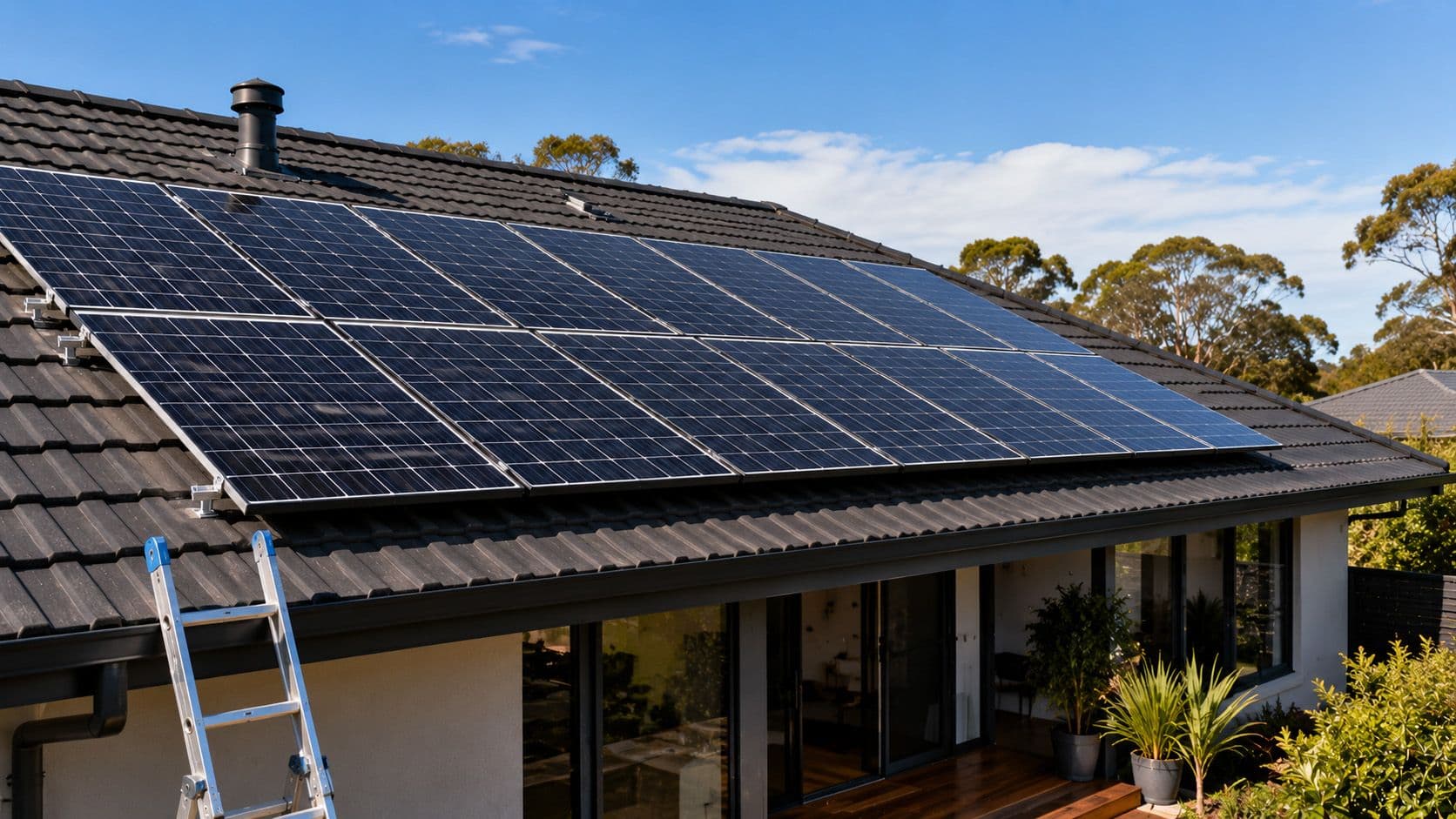
Key Takeaways
The biggest cost driver is system size, usually measured in kilowatts.
Panel brand, inverter quality, monitoring, and warranty support can affect long-term value.
Roof type, access, shading, and switchboard upgrades can increase installation cost.
A good solar quote should clearly separate panels, inverter, installation, rebates, and optional battery work.
Overview
Solar installation costs vary based on system size, panel quality, inverter type, roof access, switchboard condition, monitoring features, battery readiness, and applicable rebates or incentives.
1. Typical Solar Installation Costs
Solar installation costs are usually shaped by system size, panel quality, inverter type, roof complexity, switchboard condition, monitoring features, battery-ready wiring, installer quality, and any rebate or incentive applied to the final quote.
Small system
$4,000 – $6,500
Entry-level solar system for smaller homes or lower usage households.
Standard 6.6kW system
$5,500 – $9,000
Common residential solar setup with mainstream panels and inverter.
Premium / larger system
$9,000 – $15,000+
Higher-capacity system, premium components, complex roof, or battery-ready configuration.
2. What Affects the Cost?
The biggest cost differences usually come from system size, panel and inverter selection, roof access, shading, tile or metal roof work, electrical upgrades, monitoring setup, battery compatibility, and whether the quote includes all compliance and connection steps.
System Size
Larger systems require more panels, more mounting hardware, and more installation time.
Panel & Inverter Quality
Premium panels, microinverters, hybrid inverters, and stronger warranties increase cost.
Roof Complexity
Steep roofs, tile roofs, shading, multiple roof faces, and difficult access can add labour.
Electrical Upgrades
Switchboard work, monitoring, meter changes, and battery-ready wiring may be quoted separately.
3. Cost Breakdown
A solar quote is normally split across panels, inverter, installation labour, mounting hardware, electrical work, monitoring, administration, and grid connection requirements. Understanding the split helps you compare value beyond the headline system price.
Total
$9,000
Solar Panels
$3,500
39%
Inverter
$1,800
20%
Installation Labour
$2,000
22%
Mounting & Electrical
$1,100
12%
Monitoring / Admin
$600
7%
4. Quote & Rebate Checks
Solar quotes can look very different depending on how rebates, component brands, warranties, and optional upgrades are shown. Before accepting a quote, check the real final cost and what is actually included.
When comparing solar quotes, do not judge the offer only by the final after-rebate price. Ask the installer to clearly show the system size, panel brand and model, inverter brand and model, number of panels, estimated output, warranty terms, installation inclusions, and whether the quoted price already includes any rebate or incentive.
A lower solar quote may use cheaper components, weaker warranty support, less detailed monitoring, or limited allowance for roof complexity and electrical work. A higher quote may still be better value if it includes a reputable inverter, stronger workmanship warranty, proper site assessment, better after-sales support, and clearer performance expectations.
Before paying a deposit, confirm whether switchboard upgrades, meter changes, grid connection, monitoring setup, roof access equipment, tile replacement risk, battery-ready wiring, and system registration are included or may be charged separately.
5. How to Choose the Right System Size
The right solar system is not always the largest or cheapest system. It should match your household usage, roof space, daytime energy demand, future battery plans, and budget.
Check your electricity bill to understand daily usage, peak usage periods, and whether you use most energy during the day or at night.
A 6.6kW system is common for many Australian homes, but larger homes, EV charging, pools, ducted air conditioning, or future battery plans may justify a bigger system.
Roof space, shading, roof direction, roof angle, and multiple roof faces can limit the effective system size even when your budget allows more panels.
If most of your energy use happens at night, ask whether a battery-ready setup, usage shift, or future battery plan makes more sense than oversizing the system immediately.
Ask the installer to explain expected annual production, not just the system size, because two systems with the same kW rating can perform differently depending on roof and component quality.
6. Panel, Inverter & Warranty Checks
Solar is a long-term investment, so the component quality and warranty support can matter as much as the installation price.
Confirm the exact panel brand, model, wattage, product warranty, performance warranty, and whether the panels are suitable for your roof layout.
Check the inverter brand, inverter warranty, monitoring capability, and whether it is a standard string inverter, microinverter, or hybrid inverter.
Ask who handles warranty claims if the installer stops trading, and whether the manufacturer has strong local support in Australia.
Confirm whether workmanship warranty, roof penetration warranty, mounting warranty, and installation defects are covered separately from product warranties.
Be cautious if the quote only uses broad terms like premium panels or quality inverter without naming the actual product model.
7. Battery-Ready vs Battery Included
Many solar quotes mention battery readiness, but that does not always mean a battery is included. It is important to understand what the quote is preparing for.
A battery-ready solar system usually means the system has been designed so a battery can be added later, but the battery itself may not be included in the quoted price. This may involve a hybrid inverter, suitable switchboard setup, monitoring compatibility, or extra wiring preparation.
If the quote says battery ready, ask exactly what has been included and what will still need to be paid later. A cheaper quote may require a major inverter or switchboard change before a battery can be installed in the future.
If you plan to add a battery, EV charger, or larger household electrical load later, it may be worth paying more upfront for better compatibility instead of choosing the cheapest solar-only setup.
9. Questions to Ask Before Accepting a Solar Quote
Use these questions to compare solar quotes properly and avoid choosing a system that looks cheap but underperforms or creates upgrade costs later.
What exact panel brand, model, wattage, and warranty are included in the quote?
What inverter brand and model is included, and is it suitable for battery installation later?
Is the quoted price before or after rebates, and are all rebate assumptions clearly shown?
Are switchboard upgrades, meter changes, grid connection, monitoring setup, roof access, and installation compliance included?
What annual output is expected, and how has shading, roof direction, roof angle, and household usage been considered?
Not sure which guide fits your project?
Start a free cost check and FairScope AI will recommend the right report level for your project.
It only takes 2 minutes
2,500+
Reports Generated
98%
Customer Satisfaction
Australia
Market Focused
Secure & Private
Your data is protected